
Uncategorized
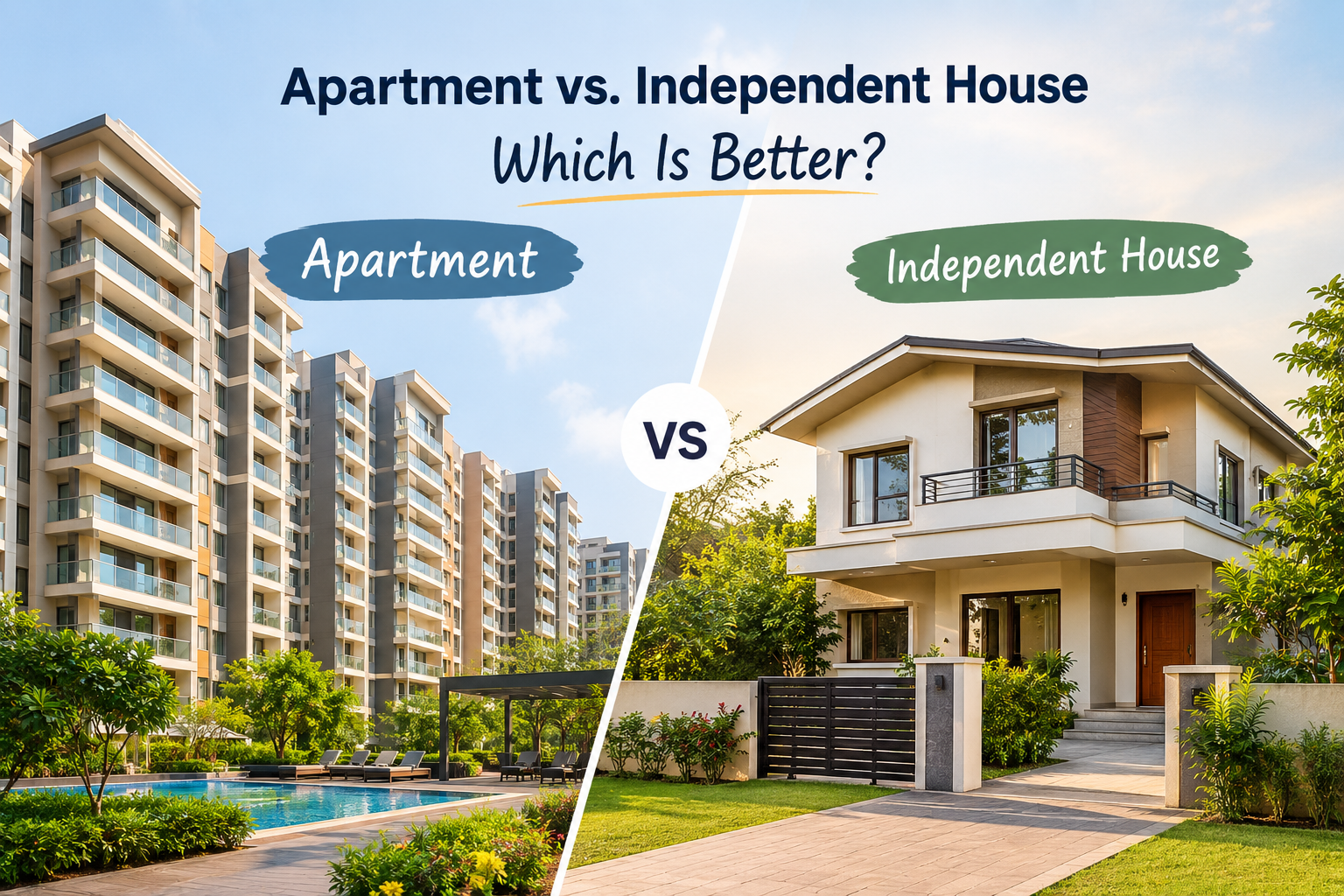
Apartment vs Independent House: Which Home Is Right for You?
A
admin_xbrick
Real Estate Expert
12 Sep 2026
7 min read
Shopping for a home sounds pretty straightforward until you actually start opening up Zillow or hitting local open houses. At first, it just feels like a giant spreadsheet exercise: find a neighborhood with decent schools, stay inside a realistic budget, and grab a place with enough bedrooms so nobody is sleeping in the closet. But once you start looking seriously, the real questions hit hard. Should you buy a condo in a brand-new building or put down roots on your own patch of land? Is apartment living actually easier, or will hearing your neighbor’s late-night TV through shared walls make you lose your mind? Which option actually pays off twenty years from now when you want to sell? What about those hidden HOA fees, daily security setups, parking headaches, and actual day-to-day privacy?
Here’s the truth: there isn’t a single right answer. Some people love condo or apartment communities because their weekends aren’t hijacked by endless house chores, and everything from a gym to a pool sits right past their front door. Others wouldn’t trade a standalone house for anything in the world- they want complete control over their yard, their own driveway, and the freedom to knock down a wall without begging a board committee for permission.
Before putting your hard-earned savings into a massive mortgage, it helps to look past the staged photos and think about what your actual day-to-day life will look like down the road.
Life in an Apartment: Zero Hassle, Built-In Community
For a huge number of modern buyers, buying an apartment or flat is simply the smartest play. You get your own private space, but you’re also part of a larger, managed setup. Depending on the complex, you might get 24/7 front-desk security, gated access, assigned parking, on-site maintenance crews, a gym, and communal outdoor spaces.
The real magic here is hands-off living. You aren’t on the hook for the building’s big infrastructure. If a storm rips up the roof, the elevator quits, or the courtyard landscaping needs a trim, the property manager handles it. You pay a steady monthly association fee, and in return, you don’t spend your Saturday mornings hunting down available plumbers or electricians. If you work crazy hours, travel a lot, or just hate dealing with home upkeep, this setup can feel like a total lifesaver.
Of course, there are always trade-offs:
- Living Close to the Action: You’re sharing walls, floors, and ceilings with neighbors. Hear heavy footsteps upstairs or doors shutting in the hallway is just part of the package.
- Playing by the Rules: You give up a chunk of creative control. Want to paint your front door bright yellow, glaze your balcony, or make major renovation moves? You’ll usually need to clear it through strict community rules first.
The Standalone House: Total Freedom, Total Responsibility
An independent house gives you something a high-density building simply can’t match: absolute control over your domain.
You don’t have to deal with shared hallways, heavy-footed upstairs neighbors, or people looking straight into your living room window. You get your own front door, a private driveway, and outdoor space that belongs entirely to you- whether that’s a small yard, a patio, or a rooftop setup.
Even better, you get total renovation freedom. If you want to install solar panels, add an extra bedroom for a growing family, convert the garage into a home office, or paint the exterior whatever color you like, it’s completely up to you (as long as you clear local zoning).
The flip side? Everything falls on your shoulders:
- No Safety Net: When a drain backs up under the driveway, the roof leaks, or the HVAC unit dies in mid-July, there’s no super or building manager to rescue you. You have to locate a reliable contractor, oversee the work, and pay the entire bill out of pocket.
- Daily Management: Keeping up the lawn, setting up home security, managing water supply systems, and staying on top of structural wear and tear become your personal weekend projects.
How They Compare Day to Day
When you break down the daily experience, the two property types handle life’s practical details very differently.
- Space & Flexibility: If you want maximum elbow room and space to grow, a single-family house usually wins. You own both the structure and the ground underneath, giving you options to build up or out down the line. That’s a game-changer if you’re planning for kids or aging parents moving in. Apartments give you fixed dimensions. While spacious multi-bedroom units exist, you’re strictly buying the square footage inside your walls. If your space needs to change later, moving is pretty much your only option.
- Privacy & Noise Control: Privacy in an apartment building is always going to be relative. You share elevators, main gates, lobbies, and parking decks. An independent house gives you a real buffer from the outside world. You can hang out on your patio or throw a backyard barbecue without feeling like the entire building is watching. If quiet downtime is essential for your mental sanity, a standalone home takes the crown.
- Security & Peace of Mind: Modern apartment complexes hit a home run here. Gated entrances, keycard access, security staff, and cameras come standard. Plus, just having neighbors close by adds an extra layer of casual security. With an independent house, safety is entirely DIY. You’ll need to research, buy, and set up your own smart locks, cameras, motion lights, and alarm systems.
- The Real Financial Picture: Entry prices for apartments are usually lower in major cities because the land cost is split among every unit in the building. A standalone house requires buying the plot itself, which bumps up the price tag fast in hot neighborhoods. On the flip side, apartments come with fixed, monthly HOA fees that never go away. House owners might go months spending zero dollars on maintenance- until a major system breaks and requires a large lump-sum fix. Long-term, single-family houses tend to grow in value more predictably simply because land gets scarcer over time, even as the building itself ages.
Comparing Options at a Glance
| Factor | Apartment Living | Standalone House |
| Upfront Price | Generally lower; shared land cost | Higher entry point; includes the private plot |
| Maintenance Effort | Handled by building management & HOA fees | 100% on you to arrange, manage, and fund |
| Outdoor & Living Space | Fixed floor plan, shared common areas | Larger total space, private yard or patio |
| Future Renovations | Limited; structural layout is fixed | Highly flexible (within local zoning rules) |
| Security Setup | Built-in (guards, keycards, CCTV, gates) | Self-funded (smart locks, alarms, cameras) |
| Privacy Level | Moderate (shared walls, halls, and amenities) | High (your own walls, boundaries, and yard) |
| Long-Term Value | Tied to location quality and building upkeep | Driven mostly by land value appreciation |
Finding Your Best Fit
At the end of the day, this choice isn’t just about square footage- it’s about how you want your daily life to feel over the next decade.
An apartment is likely your best move if:
- You work long hours and want a simple, turn-key place to rest.
- You love the idea of built-in security and shared perks like a gym or pool.
- You want to stay close to city centers, public transit, and walkable downtowns.
- You prefer fixed, predictable monthly bills over surprise emergency home repairs.
An independent house is likely your best move if:
- You want complete freedom to design, remodel, and use your property.
- You value personal space, peace and quiet, and having your own yard.
- You view your home primarily as a long-term investment in land.
- You have a growing family and need room to expand over time.
Take your time before making an offer. Drive past prospective places at different times of day to check the noise, traffic patterns, and natural light. Chat with people who already live nearby, map out your total real budget- including taxes, insurance, and maintenance- and look past the shiny fresh paint.
When you focus on the daily life you actually want to live, the decision gets much easier.
Related Articles